


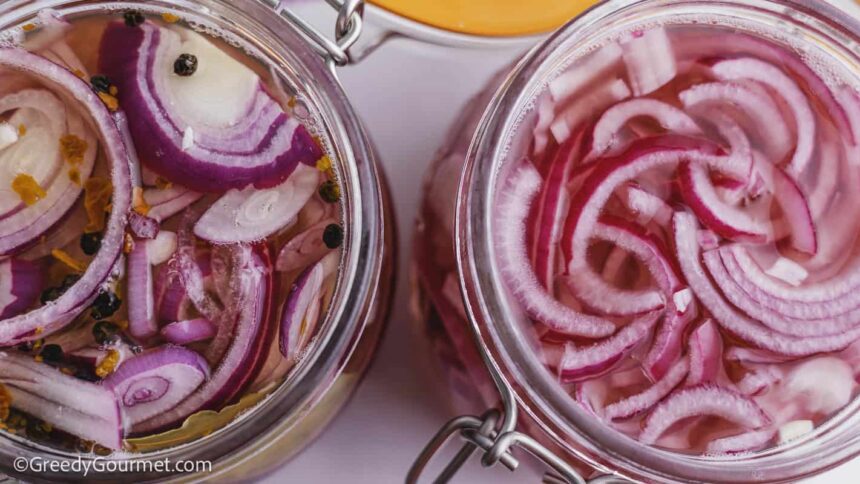
Pickled red onions take five ingredients and fifteen minutes of actual work, and the jar will quietly improve everything you eat for the next three weeks. You can have them in an hour. They will be better tomorrow.

Why this recipe works
Onions are sturdy, which is why the brine goes on hot. The heat part-cooks them, takes out that raw squeak, gets the colour moving, and hands you an edible pickle within the hour instead of tomorrow. It also knocks back anything sitting on the surface of the onion before the fridge and the vinegar take over.
(Cucumbers want the opposite, as my quick pickled cucumbers show, which is why you should be a bit suspicious of anyone who tells you there is one right way to pickle everything.)
The vinegar and water go in equal amounts. Neat vinegar bullies a sliced onion into pure sourness and you lose the onion completely. Half and half keeps the tang and still lets it taste of something.
And yes, there is sugar in it. This is the argument that follows pickled onions around the internet, so let me settle it. 35 g in 350 ml of liquid is not making a sweet pickle, it is taking the hard edge off the acid. Leave the sugar out altogether and you will taste the difference straight away, in the sour bite that turns up at the end of every mouthful.
How to slice the onions

By hand. Slower, and worth it if you care how the jar turns out. You get even half moons that sit properly against the glass and actually look like something. You also get a cast-iron excuse to stand in your own kitchen and cry, which some days is reason enough on its own.

Through the slicer attachment. This was me trying to save time by putting them through the slicer on the KitchenAid. It is quick and dirty and it absolutely works, but the slices come out uneven and a bit shredded, and the jar looks it. No tears, though.
Recipe testing notes
I use cider vinegar for these by default. It is the mellowest of the everyday vinegars, and red onion is already sweet enough that a sharp one just picks a fight with it.
The plain and the spiced jars were made side by side, which is the only honest way to tell you which one you will actually reach for.
Substitutions and variations
If you want them crunchier
Most recipes will not tell you this. Whole spices need heat to give up their flavour, but heat is also what softens the onion, so it looks like you have to pick one. You do not.
Heat the spices in the brine as normal, then let the brine cool right down before you pour it over. You get the spice and you keep the crunch. It costs you time, that is all, because cold-poured onions want overnight rather than an hour.

Which vinegar to use
- Red wine vinegar for the best colour
- White wine vinegar if you like things sharper
- Rice vinegar, the gentlest of the lot, which suits these next to anything Asian
- Plain white vinegar for the most neutral, punchiest version
Lime instead of vinegar
Cover the slices in lime juice and salt, no water at all, and leave them overnight. This is how it is done in the Yucatán, and it gives you a softer, rounder pickle that belongs on anything Mexican.
A bigger batch
Double everything and use a 1 litre jar. Worth being honest with yourself about how fast you get through them first, because they have three weeks in them and no more. If it is a glut you are working through, courgette pickle takes the same low-effort approach.
What can go wrong (and how to fix it)

The brine does not cover them
Do nothing for twenty minutes. This is the one everybody panics about and it is almost never a real problem. Salt pulls water out of the onions as they sit, so a jar that looked short when you poured usually is not short at all by the time you come back to it.
If it genuinely is, top it up with equal parts vinegar and water. Never plain water, which waters down the very thing keeping the jar safe.
They are still harsh in the middle
Sliced too thick, I am afraid, and there is no fixing it now they are swimming. Eat them anyway and go thinner next time.
They have not gone pink
Either it was not a red onion, or you are being impatient. The colour builds over hours and looks its best the following morning.
They came out softer than you wanted
That is the hot brine doing its job. Use the cold-pour method above next time.
The jar cracked
Cold glass, hot liquid. Warm it first, and I promise you only ever do this once.
The brine has gone cloudy or slimy
That is spoilage, and it nearly always comes down to a fork that had been in something else first. Do not taste it to check. Bin it and start again.
They are too sharp for you
Add another 10 g of sugar next time before you go changing vinegars. It is usually the balance that is off rather than the vinegar itself.
Storage, and what to do with the leftover brine
Three weeks in the fridge, in their brine, in a jar with a proper lid. Use a clean fork every single time, never your fingers, and never the fork that has just been in the mayonnaise. That one habit is the difference between three weeks and one.
They do not freeze. The cell walls collapse and you get pink mush.
Do not pour the leftover brine away either. It is seasoned, coloured and acidic, and it has plenty left to give:
- Whisk it into a vinaigrette, it is already most of the way there
- Marinate chicken thighs in it before they go in the oven
- Braise red cabbage in it
- Use it for a quarter of the water when you cook rice
- Blend it half and half with tahini for a very fast dressing
- Pour it over peeled hard-boiled eggs and leave them a few days

Can you pickle a second batch of onions in the same brine? Once, at a push. Bring it back to a simmer first and add a splash more vinegar and a pinch more salt, because the first batch diluted it on the way out. Beyond that you are guessing at an acidity you can no longer taste, and guessing is the wrong instinct with something you intend to eat. Fresh brine takes five minutes.
What to serve with pickled red onions
Tacos, burgers and grain bowls are the obvious ones and they have earned their place. The less obvious ones are where these really come into their own:
- Sandwiches, especially anything rich. Cold roast beef, a bacon sandwich on a Saturday, or cream cheese on an open sandwich with a few of these on top, which is barely a recipe and still one of the better lunches going
- Cold salads, and anything mayonnaise-heavy: potato salad, egg salad, tuna salad, or a pickled cabbage and red onion slaw if you want the pickle built in. All of them are quietly begging for acid and this is the cheapest way to give it to them
- Tinned fish on crackers. Sardines or mackerel, a few pickled onions on top, done. A genuinely good lunch that takes a minute
- A cheese board, especially with something soft and goaty, where the acid cuts straight through the cream
- Breakfast eggs, to wake up a plate that is otherwise entirely beige
- Next to a bowl of pico de gallo if you are laying tacos out for people. The two do completely different jobs. Pico is fresh and watery and gone by the end of the evening, these are sharp and soft and keep for weeks. Put both on the table and every taco gets the best of each
- On cilantro lime rice, or coriander lime rice if we are being British about it, which nobody is when they are naming this dish. Black beans, the pickle and whatever protein you have going, and that is a twenty-minute dinner that tastes like you tried harder than you did
- Avocado toast, which sounds like a cliché right up until you taste sharp against fat
FAQs
Should I be worried about botulism?
Not with this one. Botulism is a genuine thing to understand, but it belongs to low-acid food sealed into jars for the cupboard. The bacteria behind it cannot grow in a properly acidic jar, and that is the real safeguard here: a half-and-half vinegar brine keeps this pickle firmly on the safe side of the line. The fridge and the three-week limit are the backup, not the defence.
So keep the acid where the recipe puts it, keep the jar cold, and use a clean fork. Honestly, the fork is what will spoil your onions, not botulism. Shelf-stable canning, the water-bath and pressure kind, is a proper discipline with its own rules and this is not it.
Are pickled red onions fermented? Are they a probiotic?
No, though the two get muddled all the time. These are vinegar pickles. The acid comes out of a bottle, it goes on hot, and nothing in the jar is alive. Fermenting is the other thing entirely, salt and time and bacteria doing the work, and that is where live cultures come from. Both are worth knowing about. They are just not the same jar.
Do I need to sterilise the jar?
No, and this one trips up a lot of people. Sterilising belongs to preserving that lives in a cupboard for a year. These live in the fridge for three weeks, so hot soapy water and a proper dry is plenty. Clean is what matters here.
Why are my pickled red onions floating?
Because they are lighter than the brine and there is air trapped between the slices. It is not a fault. Press them under when you pour, then again twenty minutes later once they have softened. Anything left sitting above the brine line for days will discolour, so push it back under rather than ignoring it.
Why are they sliced rather than diced?
Slices drape over a taco or a burger and give you a bit of acid in every bite. Diced onion sinks into whatever it is sitting on and turns up in clumps.
How long before pickled red onions are ready?
An hour if you are in a hurry. A few hours if you are not. The next morning if you can wait, and that is when they are at their best.
How do I know when they have gone off?
Cloudy brine, a slimy feel, or a smell that has gone from sharp to simply wrong. Bin it, and do not taste it to find out.
Will pickled red onions upset a sensitive stomach?
They might, and it is fair to know that before you commit to a whole jar. Onion is one of the most common triggers for a sensitive gut and pickling does not change that. It is the onion doing it rather than the vinegar or the sugar. If that sounds like you, try a small amount first rather than a burger’s worth.
Can I use an onion that has started to sprout?
Yes, as long as it is still firm. Cut out the green shoot and any soft patches. A properly soft or slimy onion belongs in the bin.
Print
📖 Recipe

Pickled Red Onions
Total Time: 1 hour 15 minutes
Yield: 8 servings 1x
Diet: Vegan
Description
Sharp, sweet, bright pink pickled red onions, ready in an hour and better the next morning. Five ingredients, one jar, and it keeps for three weeks in the fridge.
Ingredients
Units
Scale
- 200 g red onions, halved top to root and sliced thinly into half moons
- 175 ml apple cider vinegar
- 175 ml water
- 35 g caster sugar
- 1 ½ tsp fine sea salt
Instructions
- Halve the onions from top to root, then slice thinly across into half moons. Pack them into a clean 500 ml jar.
- Put the vinegar, water, sugar and salt in a small saucepan. Bring to a gentle simmer, stirring until the sugar and salt have completely dissolved.
- Warm the jar with a splash of hot water from the tap, swirl it round and tip it out. Cold glass and hot brine is how jars crack.
- Pour the hot brine over the onions and press them under with the back of a spoon so they are fully submerged.
- Leave to come down to room temperature for about 30 minutes, then seal and refrigerate.
- Ready after 1 hour. Better after a few. Best the next morning, once they have gone properly pink and tender.
Notes
The spiced version. Add ½ teaspoon black peppercorns, ½ teaspoon coriander seeds (toasted in a dry pan for 30 to 60 seconds first), 1 crushed garlic clove and a bay leaf to the brine before you heat it. A pinch of dried chilli flakes for warmth.
For a crunchier pickle. Heat the whole spices in the brine as normal, then let the brine cool completely before pouring. You keep the spice flavour and the crunch. Allow overnight rather than an hour.
Vinegars. Red wine vinegar gives the best colour. White wine vinegar is sharper. Rice vinegar is the mildest. Plain white vinegar is the most neutral.
If the brine does not cover them, wait twenty minutes. Salt draws water out of the onions and the level usually rises. If it is still short, top up with equal parts vinegar and water, never plain water.
Storage. Keeps 3 weeks in the fridge in its brine. Use a clean fork every time. Do not freeze.
- Prep Time: 10 minutes
- Cook Time: 5 minutes
- Category: Condiment
- Method: Stovetop
- Cuisine: British
Nutrition
- Serving Size: about 25 g, one eighth of the jar
- Calories: 32
- Sugar: 5.4 g
- Sodium: 439.1 mg
- Fat: 0 g
- Saturated Fat: 0 g
- Trans Fat: 0 g
- Carbohydrates: 6.9 g
- Fiber: 0.4 g
- Protein: 0.3 g
- Cholesterol: 0 mg